Three primary facilities handled the manufacturing of the coin.
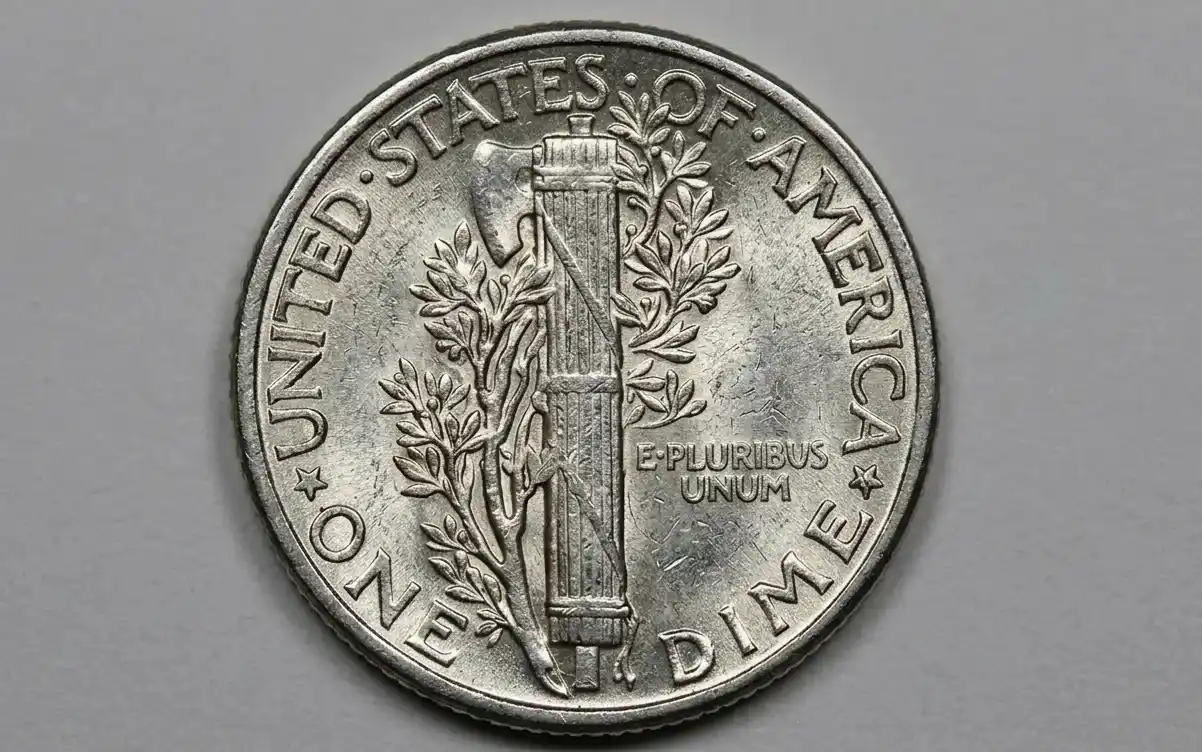
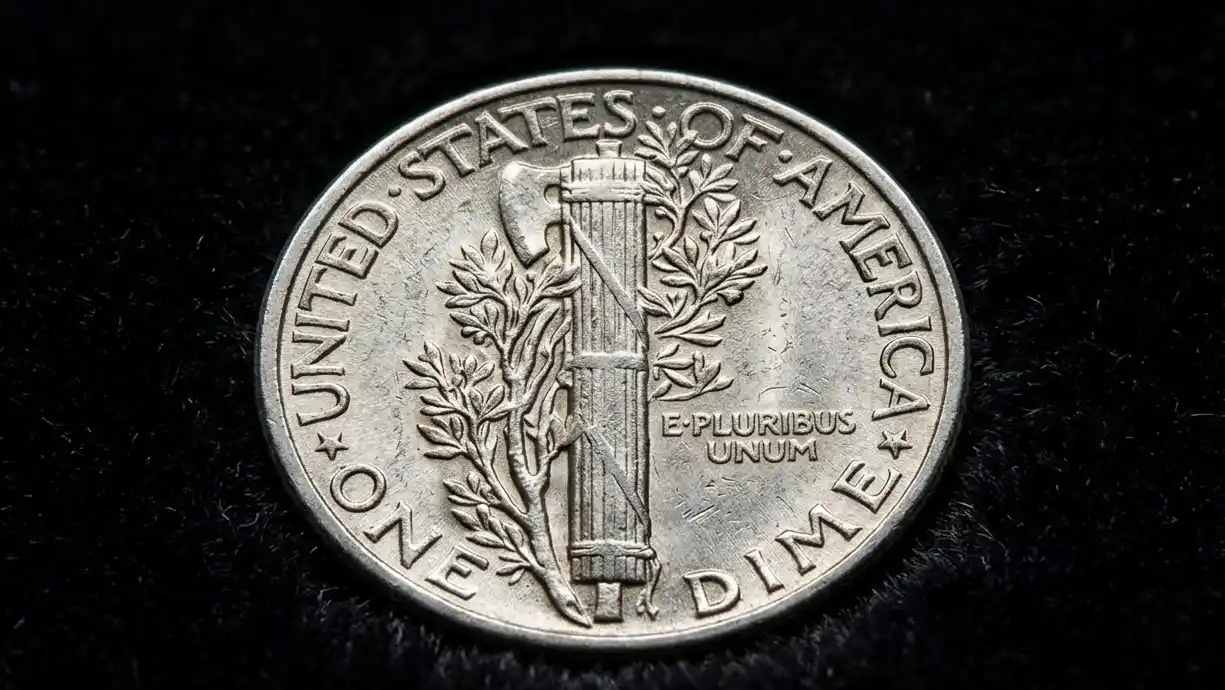
Each facility utilized specific identifiers located on the reverse side to the left of the fasces.
Absence of a mark indicates Philadelphia production.
Letter D corresponds to Denver.
Symbol S represents San Francisco.
A 1945 dime value for specimens in average condition correlates primarily with the market price of silver.
| Feature | Parameter |
| Face Value | $0.10 USD |
| Total Weight | 2.50 g |
| Metal Composition | 90% Silver, 10% Copper |
| Pure Silver Weight | 2.25 g |
| Diameter | 17.9 mm |
| Designer | Adolph A. Weinman |
| Edge Type | Reeded |
Manufacturing processes involving worn dies in 1945 resulted in many specimens possessing weak strikes.
Statistical Mintage Data
Production volume distributed across the mints unevenly.
Official United States Treasury data provides the following figures.
- Philadelphia (No Mint Mark): 159,130,000 units
- Denver (D): 40,245,000 units
- San Francisco (S): 58,490,000 units
Total combined mintage: 257,865,000 units.
Massive output in Philadelphia explains the prevalence of these coins in modern low-budget collections.
Denver issues generally show superior detail compared to other facilities.
Value Assessment Based on Condition
Coin grading follows the Sheldon scale ranging from 1 to 70 points.
Pricing for high-grade coins depends on the scarcity of a specific grade level.
Market Prices for Circulated Coins
Average values for coins showing signs of wear appear below.
| Grade | Philadelphia | Denver (D) | San Francisco (S) |
| Good 4 | $2.50 | $2.50 | $2.50 |
| Fine 12 | $2.80 | $2.80 | $2.80 |
| Very Fine 20 | $3.10 | $3.10 | $3.10 |
| Extremely Fine 40 | $3.50 | $3.50 | $3.50 |
| About Uncirculated 50 | $4.20 | $4.20 | $4.20 |
Moving from EF-40 to AU-50 results in a price increase of approximately 20%.
Values for Mint State (MS) Specimens
Coins lacking signs of wear command significantly higher prices.
Evaluators focus on the absence of marks on the coin surfaces.
| Grade (MS) | Philadelphia | Denver (D) | San Francisco (S) |
| MS-63 | $12 | $15 | $15 |
| MS-65 | $28 | $35 | $30 |
| MS-67 | $95 | $85 | $110 |
Price trends demonstrate a sharp jump upon reaching the MS-67 level.
The “Full Bands” (FB) Factor
The term Full Bands describes the clear separation of the horizontal lines on the reverse fasces.
This characteristic remains extremely rare for 1945 Philadelphia issues.
Cause → Use of over-polished or worn dies at the end of the series production cycle.
Possessing the FB designation transforms a standard coin into a high-tier investment asset.
Comparing prices for Philadelphia (1945) with and without FB:
- MS-65 without FB → $28
- MS-65 with FB → $15,000
Value differences exceed 50,000% in these instances.
Certified population statistics for 1945 FB (PCGS):
Fewer than 150 units identified across all grade levels.
Record Auction Sales
Analyzing trades over the last decade highlights significant transactions.
Data originates from Heritage Auctions and Stack’s Bowers reports.
- 1945-D MS-68 FB: Sold in 2019. Price: $12,925.
- 1945-S MS-68 FB: Sold in 2018. Price: $11,400.
- 1945-P (Philadelphia) MS-67+ FB: Absolute record. Sold in 2018 for $156,000.
Price dynamics for the record 1945-P FB specimen:
2005 Year: $40,000 → 2018 Year: $156,000.
Average annual growth reached roughly 11%.
Investment Potential and Risks
Investing in 1945 silver coins requires a differentiated strategy.
Low-grade silver serves as a capital preservation tool following inflation trends.
High-grade coins featuring certified labels demonstrate independent price trajectories.
Factors impacting annual price changes:
- Market price of silver: ±15% per year.
- Population growth in grading registries: increased supply lowering prices by 3-5% for mid-range grades.
- General interest in the Mercury series: steady growth of 2-4% annually.
Pricing logic chain:
Silver price rise → Increase in base coin value → Higher demand for preserved specimens → Auction scarcity → New price records established.
Varieties and Minting Errors
Production errors from 1945 attract attention due to their rarity despite large mintages.
The “Micro S” mint mark variety remains a primary subject of study and can be detected with any coin value checker app.
Micro S Description:
Using a punch intended for other purposes resulted in a smaller S letter.
| Grade | Normal 1945-S | 1945-S Micro S |
| MS-63 | $15 | $65 |
| MS-65 | $30 | $150 |
| MS-67 | $110 | $850 |
Other error types:
- Off-center strike: value depends on the percentage of displacement (10% → $20, 50% → $150).
- Double Die: rarely encountered and often weakly defined.
- Die Cracks: adding between $5 and $50 to the base value.
Chemical Composition and Preservation Analysis
1945 dimes experience chemical reactions when exposed to environmental factors.
Silver oxidation leads to the formation of surface coloring called toning.
Impact of toning on price:
- Rainbow Toning → Increasing value by 20-50%.
- Dark, uneven toning → Decreasing value by 10-30%.
The 10% copper content causes specific defects during long-term storage in soil.
Corroded specimens lose up to 90% of numismatic premium while retaining metal value.
Grading Impact on Liquidity
Selling coins without certification from professional services (PCGS, NGC) proves difficult.
Grading costs for a single coin range from $20 to $60.
Executing the procedure for coins valued below $50 appears economically impractical.
Rejection statistics for cleaning (Cleaned status):
Approximately 25% of 1945 coins sent for expertise show signs of mechanical or chemical cleaning.
Result of cleaning → Details grade assignment → Price drop of 40-60% from the market standard.
Comparison with Other Years
Understanding the context requires comparing 1945 with other years in the decade and the ability to scan coins for value.
The 1940s featured the largest mintages in the history of the series.
| Mint Year | Total Mintage (Millions) | Price in MS-65 ($) |
| 1942 | 315.1 | $25 |
| 1943 | 324.7 | $25 |
| 1944 | 431.1 | $25 |
| 1945 | 257.8 | $28 |
1945 represents the lowest mintage within the final three-year period (1943-1945).
Collection Storage Methodology
Maintaining coin luster requires strict temperature and humidity controls.
Using holders containing PVC is unacceptable for collectors.
Reason → Release of acids destroying the silver surface over time.
Recommended storage tools:
- Inert plastic capsules.
- Glass-topped display trays.
- Professional grading slabs.
Correct storage → Prevention of grade degradation → Preservation of investment worth.
Geographic Distribution and Modern Market
1945 coins frequently appear in old bank bags across the country.
Regional differences in mint mark distribution:
- East Coast: dominance of Philadelphia coins lacking marks.
- West Coast: prevalence of the S mark.
- Central States: high concentration of the D mark.
Recent years show an influx of coins from Europe and Asia brought by military personnel after the war.
This supply stabilizes prices for mid-range grades (VF-AU), preventing sudden spikes.
Economic Cycles and Metal Value
Calculating the silver value in a 1945 dime follows a specific formula:
(Silver price per gram × 2.25 g).
Assuming a silver price of $0.80 per gram:
0.80 × 2.25 = $1.80.
Metal price fluctuations directly influence the “price floor” of the coin.
2011 Period (Silver peak) → Minimum coin price stayed above $3.50.
2015 Period (Silver drop) → Minimum price fell toward $1.30.
Volatility in precious metals remains a key factor for owners of large quantities (rolls) of 1945 dimes.